Facts checked 2026-11-15.
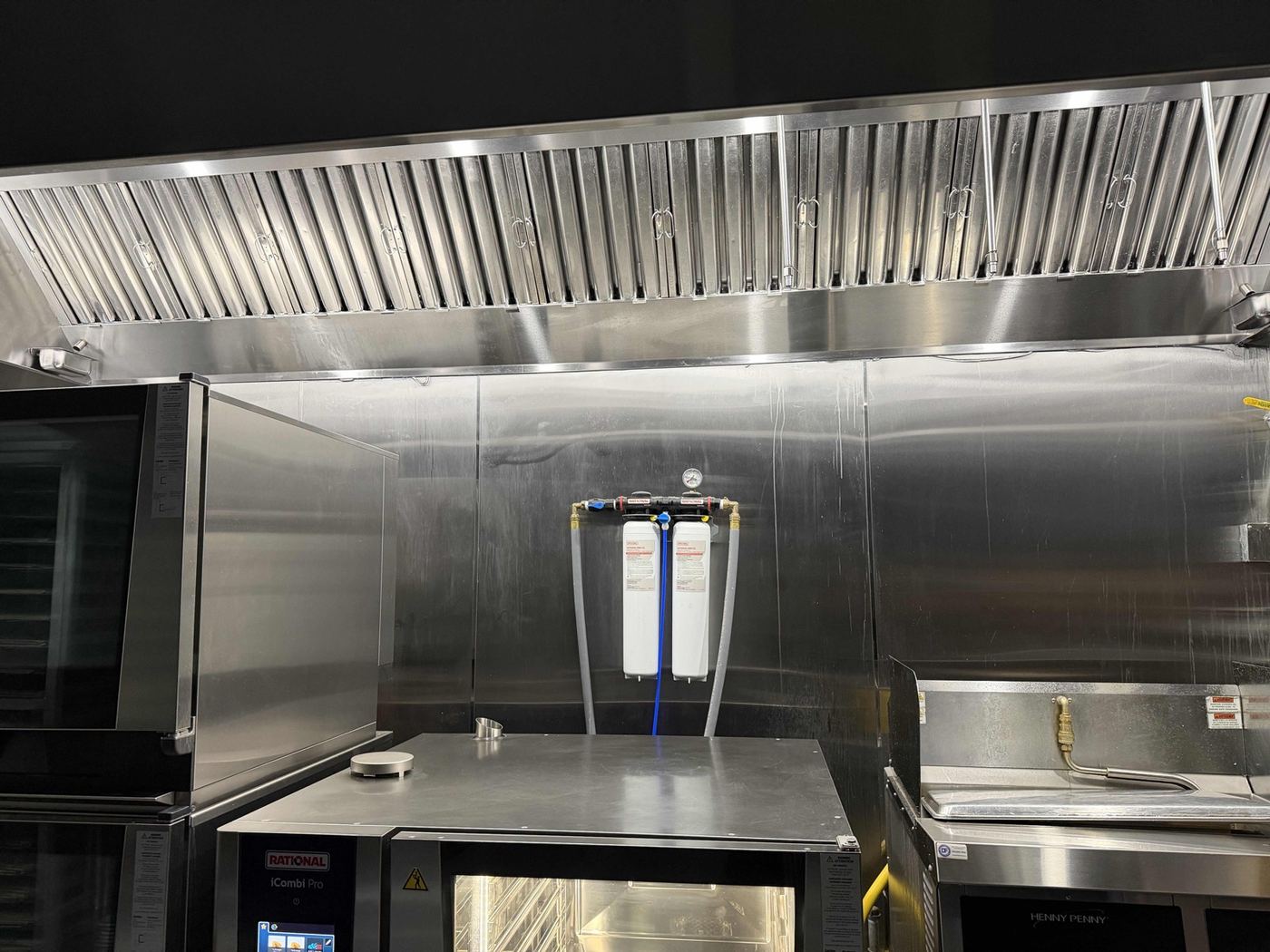
A hood job in a Georgia kitchen involves the mechanical code, the fire rules and the health rules together. Tell Commercial Kitchen Connect whether you need a new hood, a new exhaust fan, a filter swap or a repair, and the request goes to a mechanical contractor near you.
The code that applies
The Department of Community Affairs set the 2024 International Mechanical Code, with Georgia amendments, to take effect on January 1, 2026. Those amendments route commercial kitchen exhaust to the fire rules. A Type I hood, its duct and its exhaust equipment have to meet NFPA 101 and NFPA 96 in the form the Safety Fire Commissioner adopted.
One amendment surprises people. A home-style range installed in a commercial kitchen is still subject to the commercial hood rules.
Which NFPA 96 edition is current
Rule 120-3-3 adopts the 2024 edition of NFPA 96, effective May 27, 2025. The 2017 edition came before it. Further changes were proposed late in 2025, so ask the fire marshal which text the inspector will use at the final inspection.
Get prices for this job. Send one request and pick how many local companies quote it.
Get quotesThe health office's view
County health inspectors also look at the hood. Rule 511-6-1-.05 says the hood system must stop grease and condensation from dripping onto food, equipment or utensils, and its filters must slide out for cleaning. In your plan submission the hood appears among the fixed equipment, with its type and model.
Local checklists differ
Every city and county keeps its own list of requirements.
- Atlanta: the online portal requires mechanical plans as uploads. Reviewers also expect to see the physical state contractor license card.
- Gwinnett County: mechanical trade permits are issued to the contractor of record by Planning and Development. Each inspection request cites the permit case number.
Phone the building department to learn which contractor license it wants for duct and hood jobs.
A rebate to look up
Georgia Power lists a commercial rebate of $500 per horsepower for high-efficiency ventilation hoods with sensor control. Eligibility rules vary by program, so read them before ordering a hood.
Checks before you order
- Ask the plan reviewer to confirm the hood is Type I.
- Find out whether the fire marshal wants duct access panels at set points.
- Decide how makeup air will enter the kitchen.
- Make sure the hood has an approved fire-extinguishing system installed by a licensed firm.
- Ask which NFPA 96 edition applies at inspection.
The contractor's part
A hood job seldom ends with the hood. The duct run, the rooftop fan and the air that replaces what the fan removes must all work together, and each has its own line in the plans. Georgia's mechanical amendments link kitchen exhaust to the fire rules, so a contractor with experience in your county already knows what the inspector expects. Ask whether it has pulled mechanical permits in your city and whether it would be the contractor of record.
Questions
Which building code covers a restaurant hood in Georgia?
The 2024 International Mechanical Code with Georgia amendments, in force since January 1, 2026. For kitchen exhaust, the code sends you to NFPA 96 in the version the Commissioner adopted.
Is a fire suppression system required under a Georgia hood?
Yes. The state's fire code changes call for an approved automatic fire-extinguishing system on each required commercial kitchen exhaust hood and duct.
Which edition of NFPA 96 does Georgia follow?
The 2024 edition, effective May 27, 2025. More changes have been proposed, so confirm the current text with your fire marshal.
Does Georgia Power help pay for a new hood?
It lists a rebate of $500 per horsepower on high-efficiency ventilation hoods with sensor control, subject to the program's own eligibility rules.